“Let’s speak the language of music”
As a pianist, it’s easy to be alone in your room, a one-person band thundering away at the keyboard, transforming notes on a page into a supersonic experience.
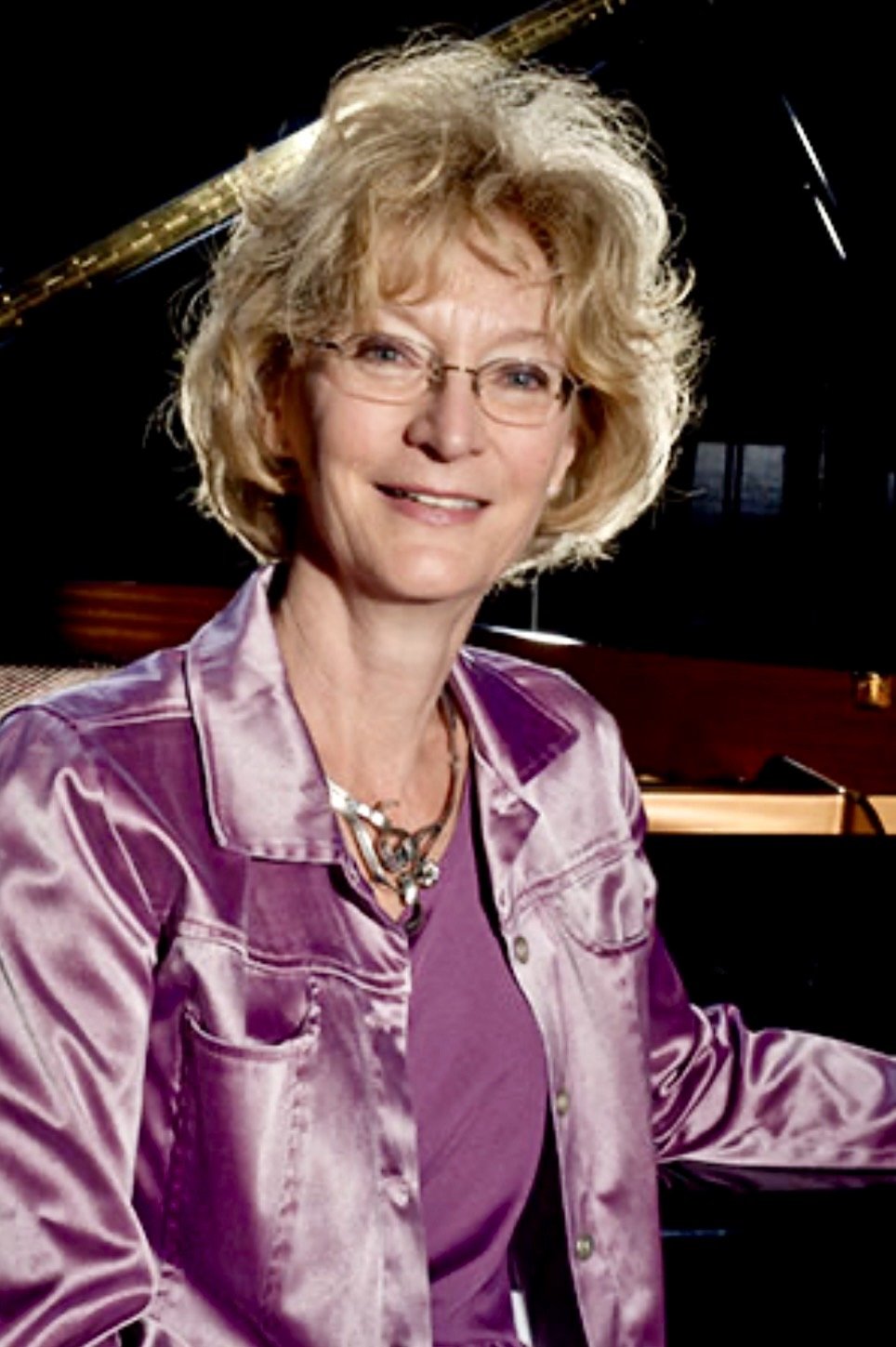
Pianist Jane Hayes prefers to share her musical world with others, to inhabit a creative space where she can engage with the rhythmic pulse of a cello, the measured breath of winds, the burnished tones of brass players, the words of a singer.
“When I play,” she says, “I never think just about the piano but about other sounds, gestures, breathing, bowing, telling a story using sound.”
She’s a true collaborative pianist, often playing with the Vetta Chamber Ensemble and Yarilo music, and as a founding member of Vancouver’s Turning Point Ensemble where her passion for contemporary music has been nourished. She’s a teacher, an adjudicator, a recording artist who has played concerts all over the world and has been nominated for a couple of West Coast Music Awards in recognition of her singular contribution to the musical community in Canada.
Jane grew up in Ottawa. She began piano lessons at 10, sang in the church choir and was soon spending up to five hours a day practicing on a rented spinet that sat under the living room window. For a painfully shy young girl, the piano became her voice. At 16 she fell in love with chamber music at a summer music camp in Niagara-on-the-Lake. Before long, making a life in music just seemed a natural thing to do. She never stopped to think about pursuing anything else.
She went on to get her B.MUS at the University of Toronto and a M.Mus at the University of Cincinnati, making her solo debut with the Toronto Symphony while still a student. She taught and freelanced in and around Toronto for about a decade, then moved to Vancouver to help launch a brand new music program at Kwantlen Polytechnic University and raise a family.
In 2017 Jane spent a transformative month teaching in China. It reinforced her belief that music is essential to the human soul. And during her 27 years at Kwantlen, she transformed the lives of students by helping them to realize that anything was possible.
“At this point in my life, I have a chance to bring together all the years of teaching, problem solving, researching, and collaboration with amazing musicians,” she says.
“Performing in front of an audience, being in the moment, realizing that it will never be the same, it's an adrenaline rush to be sure. But to feel that what you do is touching your listeners, might actually make their world a little happier or kindle memories both happy and sad – that’s the joy of being a musician.”